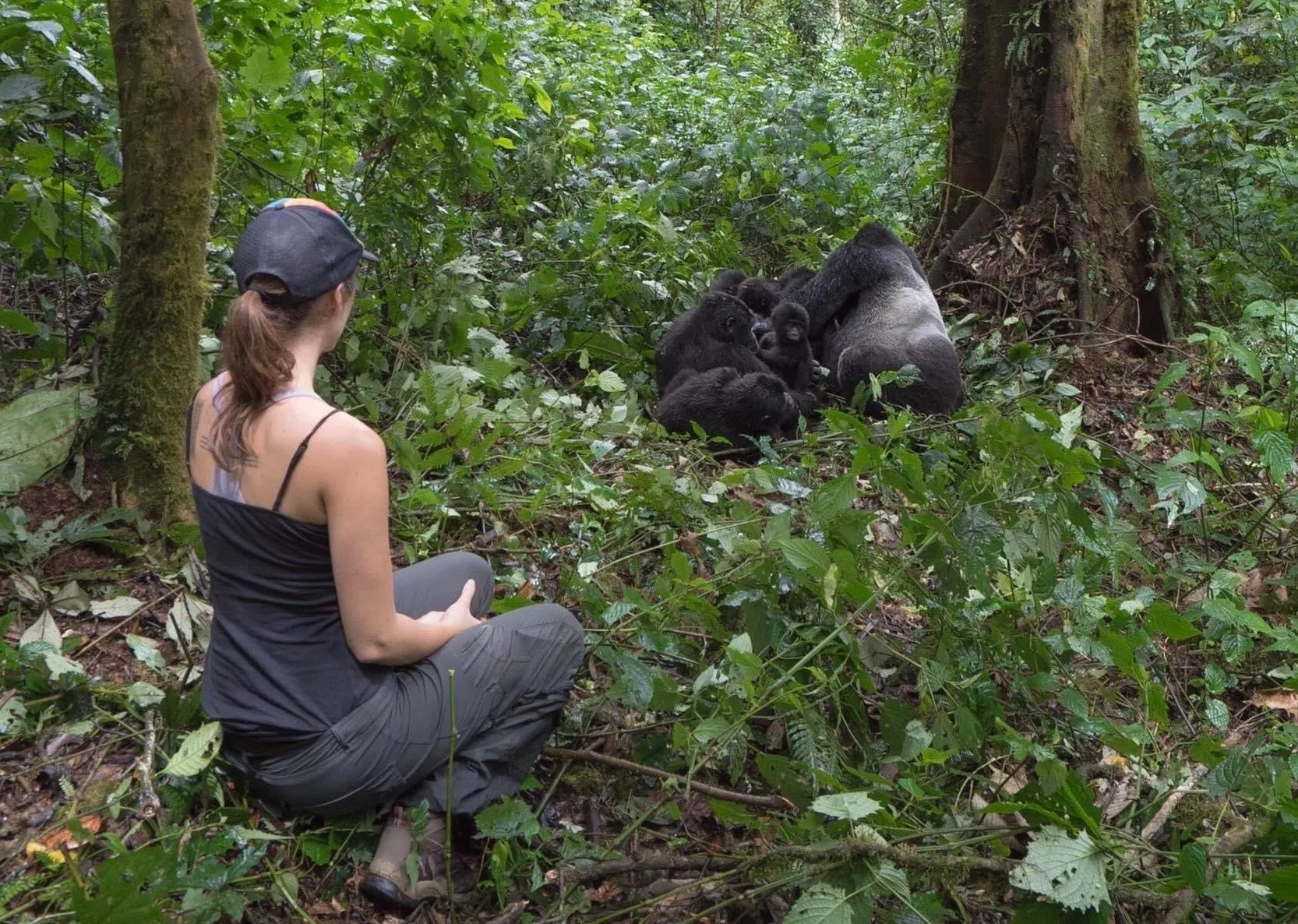
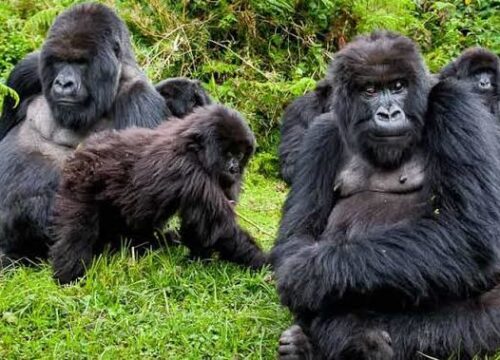
There are just over 1,000 mountain gorillas left in the world, and almost half live in Bwindi Impenetrable National Park. This is one of the few places on Earth where you can stand a few metres from a wild silverback in its natural habitat.
Gorilla trekking in Uganda is not a typical safari. It is a slow walk through thick forest, guided by trackers who know where the gorillas moved that morning. When you find them, you spend one hour watching them feed, move, and interact. That hour is the reason people travel here.
At Gigo Safari Africa, we are based in Uganda. We arrange your permit, transport, lodge, and guide. You arrive ready, and we handle everything behind the scenes.
Why Travellers Choose Gorilla Trekking in Uganda
Uganda Safari tours gives you more value and a deeper experience than anywhere else.
Uganda gorilla trekking permit costs $800, which is far lower than Rwanda. This alone makes a big difference, especially for couples and families. Uganda also has more habituated gorilla families, so it is easier to secure permits on your preferred dates.
The experience itself feels more natural. Bwindi is a dense rainforest, not an open park. The trek is real. It can be steep and muddy, but that is part of what makes the encounter meaningful.
Uganda also allows you to build a full safari. You can add chimpanzee trekking in Uganda (Kibale Forest National Park or game drives in Queen Elizabeth National Park). This is something Rwanda cannot match in one trip.
Where Gorilla Trekking Happens in Uganda
Gorilla trekking in Uganda takes place in two protected parks in the southwest. The main destination is Bwindi Impenetrable National Park, which holds most of the gorilla families. The second option is Mgahinga Gorilla National Park, known for its quieter setting and fewer visitors.
Bwindi Impenetrable National Park
Home to more than 20 habituated gorilla families across four sectors. Offers the highest chance of permit availability and varied trekking experiences.
Mgahinga Gorilla National Park
Smaller park with one habituated gorilla family (Nyakagezi group). Treks are shorter and less crowded, ideal for a quieter experience.
Trek Duration & Experience
Treks can take between two to eight hours depending on gorilla location. Trackers guide you directly to the family for a one-hour encounter.
Our Tourists Experiences & Reviews
Posted on Google
Jordan k junior
Trustindex verifies that the original source of the review is Google.
Posted on Google
Anitah Ann
Trustindex verifies that the original source of the review is Google.
Posted on Google
Godfrey Laxman
Trustindex verifies that the original source of the review is Google.
Posted on Google
Nakirijja Jackline
Trustindex verifies that the original source of the review is Google.
Kireka
Posted on Google
Waliggo Charles
Trustindex verifies that the original source of the review is Google.
Gorilla Trekking Packages
Our trips are built around your dates and how you want to travel. A two-day trek is the shortest option. It works well for travellers coming through Kigali. Expolre more tours:
Gorilla permits are limited and often sell out months in advance. If you have travel dates in mind, the best time to secure your permit is now.
Contact Gigo Safari Africa with your dates and group size. We will send you a clear itinerary and full price within 24 hours. You will be dealing directly with a local team that knows these parks and works here every day.
Gorilla trekking is possible all year. The best time is from June to September when trails are easier to walk. December and January are also popular. Wet months are quieter, with fewer crowds and lower lodge prices.
Yes, trekking continues during the rainy season. The trails are wetter and more challenging, but permits are easier to get and the experience with gorillas remains the same.
Most travellers arrive through Entebbe or Kampala and drive to Bwindi Impenetrable National Park. A faster option is flying into Kigali and driving 4 to 5 hours to southern Bwindi.
Wear long trousers, a long-sleeved shirt, and strong hiking boots. Carry a rain jacket, gloves, water, and snacks. Proper clothing protects you from mud, plants, and insects.
Yes, it is safe. Treks are guided by trained rangers, and gorillas are used to human presence. Rules are followed to keep both visitors and gorillas safe.