
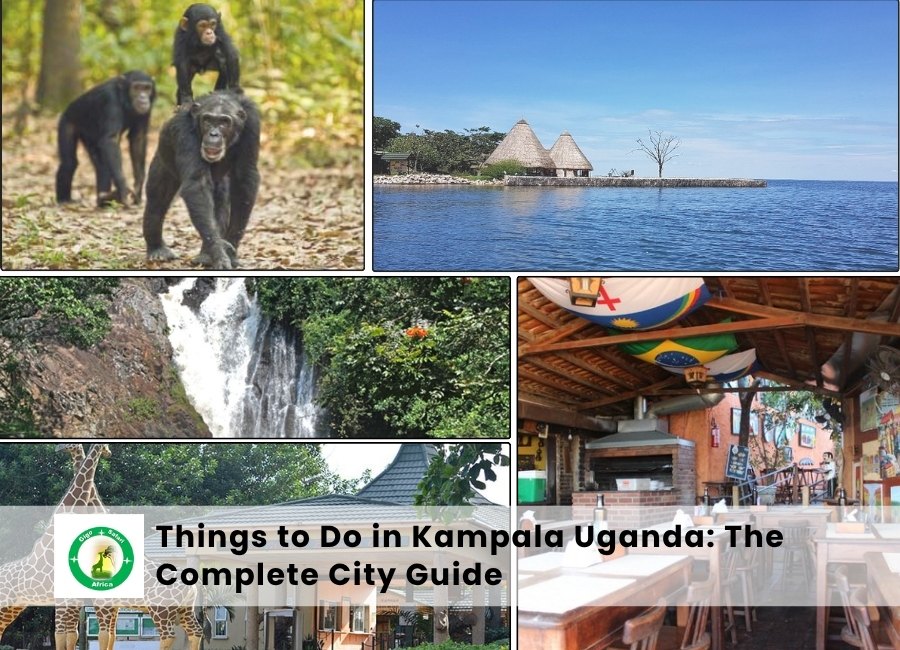
Things to Do in Kampala, Uganda: The Complete City Guide
Most travelers pass through Kampala on their way to Bwindi or Murchison Falls and give the city a day at most. That is a mistake. Kampala is one of the most genuinely alive cities in East Africa, loud, layered, sometimes overwhelming, and absolutely worth two or three proper days of your time. The travelers who spend time here before heading out on safari consistently say the same thing afterward: understanding Kampala made the rest of Uganda make more sense.
The city is built across seven hills, which gives it a dramatic geography you do not find in flat East African capitals. Every hill has a different personality and a different story. The Buganda Kingdom’s royal tombs sit on one. The country’s largest mosque stands on another. An Anglican cathedral dominates a third. That hill-by-hill structure is a useful frame for understanding Kampala, because the city did not grow outward from a center; it grew across these ridges and valleys in layers of history that are still very much visible if you know where to look.
This guide covers significant things to do in Uganda, especially Kampala, from the UNESCO-listed royal tombs to the late-night street food scene, with practical details to help you actually plan your time here.
The Kasubi Tombs: Kampala’s Most Important Historical Site
The Kasubi Tombs on Kasubi Hill are the most culturally significant site in Kampala and the only UNESCO World Heritage Site within the city. The complex dates to 1882, when it was originally built as a palace for Kabaka Mutesa I, the then-king of the Buganda Kingdom. After Mutesa I died, the palace was converted into a royal mausoleum, and it has served as the burial place of four successive Buganda kings ever since.
The centerpiece of the site is the Muzibu-Azaala-Mpanga, an enormous circular structure with a conical thatched roof built entirely from traditional materials: wooden poles, spear grass, reeds, and wattle. There is no modern building material anywhere in its construction, and the craftsmanship reflects techniques passed down across generations of Buganda builders. The structure was almost destroyed by fire in 2010 and has undergone a long, careful rebuilding effort using traditional methods. The site finally reopened fully in 2025, and the rebuilt tombs are arguably even more impressive than before because you can see the precision of traditional Ganda construction up close.
Inside the complex, there are three distinct areas. The main chamber holds the four royal tombs themselves, marked by symbolic objects and tended by the widows of former Kabakas who live on the grounds and continue the tradition of maintaining and protecting the graves. A separate area holds the drum house, where royal drums important to Buganda ceremonial life are stored. The outer grounds contain family burial sites and several traditionally built homes still occupied by royal attendants.
This is an active spiritual site, not just a museum. Dress conservatively when you visit — long trousers for men and a wrap or long skirt for women — and follow your guide’s instructions about where to stand and photograph. A guided tour here takes around an hour to ninety minutes and reveals the layers of Buganda royal history in a way that no amount of reading can replicate. The site is about 3 kilometers from Kampala city center.
The Uganda National Mosque: The Best View in Kampala
The Uganda National Mosque on Old Kampala Hill is the largest mosque in Uganda and one of the largest in East Africa. It is widely known as the Gaddafi Mosque because it was gifted to Uganda by the late Libyan leader Muammar Gaddafi, who financed the completion of a structure that had been started under Idi Amin in the 1970s but never finished. The mosque can accommodate somewhere between 15,000 and 35,000 worshippers, depending on the source, and its architecture blends Arabic, European, and African design elements into something that is distinctive against the Kampala skyline.
Non-Muslim visitors are welcome inside the mosque with an entrance fee of around 25,000 UGX, which includes a guided tour of the interior and the climb up the minaret. That minaret is the main event for most visitors. The staircase has around 300 steps, but what you find at the top earns every one of them. From the minaret, you have a full 360-degree panoramic view of Kampala that is unlike any other vantage point in the city. You can see all seven of the original hills laid out below you, Mengo, Rubaga, Namirembe, Kasubi, Kibuli, Old Kampala, and Nakasero — with the city spreading between them in every direction. On a clear day, you can even make out the shimmer of Lake Victoria to the south. It is genuinely the best way to understand the geography of Kampala before you explore it at ground level.
The mosque guides are excellent, knowledgeable about both the Islamic community in Uganda and the wider history of the site, and they tend to share stories and context that you will not find in any written guide. Wear modest clothing for this visit regardless of your own religious background, and remove your shoes before entering the prayer hall.
Kabaka’s Palace (Lubiri) and the Royal Mile
The Lubiri on Mengo Hill is the official palace of the Kabaka, the king of Buganda, and it occupies a commanding position above the surrounding city. The grounds are open to the public with a guide, though the main palace residence itself is not accessible to visitors. What you can explore is a sprawling hilltop compound with a great deal of history compressed into it.
The most significant stop on any palace tour is the underground torture chambers built during Idi Amin’s regime in the 1970s. This is a genuinely sobering place. The chambers were used for the detention and killing of political opponents, and standing in them is one of the more confronting historical experiences available in Kampala. It does not feel like performance — it feels like what it is, which is a real place where terrible things happened not very long ago. That gravity is important to sit with, and most visitors come away feeling the visit was worthwhile, even if it was uncomfortable.
The tour also covers the history of the Buganda Kingdom’s relationship with Uganda’s post-independence governments, which is a complex and often violent story. The 1966 crisis, in which Prime Minister Milton Obote sent the army to attack the palace, is described in detail by guides who bring the royal family’s perspective to the narrative.
Connecting the Lubiri to the nearby Bulange building — the administrative headquarters of the Buganda Kingdom that houses the Lukiiko, the Buganda Parliament — is a paved tree-lined road called the Royal Mile, or Kabaka Anjagala. This ceremonial road is flanked by specially chosen trees and is a pleasant walk on a dry morning, giving you a sense of the kingdom’s ceremonial geography in a way that maps cannot.
Uganda National Museum: East Africa’s Oldest Museum
The Uganda National Museum in the Kitante area was established in 1908, making it the oldest museum in East Africa. It covers Uganda’s cultural history through exhibitions on ethnography, archaeology, natural history, and pre-colonial and colonial life. The display of traditional musical instruments is particularly strong, Uganda has dozens of different ethnic groups, each with distinct musical traditions, and the collection here lets you understand that diversity through objects rather than abstractions.
The outdoor section of the museum features a reconstructed traditional village with life-sized huts built in the styles of several different Ugandan ethnic groups. It is the kind of tangible, walk-around cultural exhibit that works better than indoor display cases for conveying how different these traditions actually are from each other. Guides who work in this section tend to know their material in depth and are worth engaging — they can explain things about bark cloth production, royal regalia, and agricultural tools that go well beyond what is written on the labels.
The museum is best visited on a weekday morning before school groups arrive. The entry fee for foreign visitors is around $10. Allow at least two hours, longer if you are genuinely interested in the collections.
Ndere Cultural Centre: Uganda’s Culture in One Evening
The Ndere Cultural Centre in Ntinda is the best single place in Uganda to experience the country’s performing arts traditions in an accessible, well-organized setting. The centre hosts regular evening performances (on Wednesday and Sunday). Sherehe shows are the most popular, where professional performers from the Ndere Troupe present traditional dances, music, and storytelling from Uganda’s many different ethnic groups.
Each dance in a Ndere performance tells a story or marks an occasion. The Kiganda dance of the Baganda people, the energetic dances of the Acholi from the north, the graceful routines of the Banyarwanda, and dances from the Toro, Ankole, and Busoga traditions all appear in a single evening. The performances are lively, theatrical, and genuinely entertaining rather than dry or ceremonial — this is not a museum-style cultural presentation but a real performance by talented artists who take obvious pride in their work.
The centre also has a restaurant serving traditional Ugandan food, which means you can eat a proper local dinner and watch the show in the same place. Entry fees are around 100,000 UGX for foreign visitors, including dinner. Book ahead for peak evenings, particularly on Sundays when demand is highest. The show runs for about two hours and families with children find it as engaging as solo travelers or couples.
Namirembe Cathedral and Rubaga Cathedral: Faith on the Hills
Two of Kampala’s original hills are each crowned by a major Christian cathedral, and both are worth visiting for their historical significance and the views they offer over the city.
Namirembe Cathedral on Namirembe Hill is the oldest in Uganda, with its origins going back to 1890. The current red-brick Anglican building dates from 1919 and sits at the top of the hill surrounded by tall palm trees that make it one of the most recognizable silhouettes in Kampala. From the cathedral’s terrace, on a clear day you can see Lake Victoria in the distance and the city spreading across the hills below you. Sunday service in English takes place at 7:00 am, and attending even briefly gives you a sense of how central the Anglican church has been to Ugandan social life since the colonial period.
Rubaga Cathedral on Lubaga Hill is the seat of the Catholic Archbishop of Kampala and has a similar commanding position over the city with equally good views. The cathedral’s interior is more ornate than Namirembe and the building itself, which dates from 1925, has an imposing exterior that rewards the climb up the hill. Both cathedrals are free to visit and are open to visitors of all faiths.
The Bahá’í Temple: Africa’s Only House of Worship
On Kikaya Hill, about 8 kilometers from the city center, stands the only Bahá’í House of Worship on the African continent. The temple was completed in 1961 and sits within beautifully maintained gardens that offer a genuinely peaceful retreat from Kampala’s intensity. The building itself has a distinctive dome and nine sides. Bahá’í temples are always built with nine sides representing openness to all people, and the interior is serene and simply decorated.
The temple is open to people of all faiths and no faith, and there is no entrance charge. Visitors are welcome to sit quietly inside, walk the gardens, or join one of the brief devotional gatherings that take place on a regular schedule. The gardens alone are worth the trip on a day when you need a break from the noise of the city center. The views from the hillside are good, and the atmosphere is genuinely restful in a way that few places in Kampala manage.
Namugongo Martyrs Shrine: Uganda’s Most Important Pilgrimage Site
About 12 kilometers northeast of Kampala city center, the Namugongo Martyrs Shrine commemorates one of the most significant events in Uganda’s religious history. Between 1885 and 1887, Kabaka Mwanga II ordered the execution of 45 Christian converts 22 Catholics and 23 Anglicans, who refused to renounce their faith or comply with the Kabaka’s demands. The youngest was just 14 years old. They were burned alive at Namugongo.
Twenty-two of the Catholic martyrs were canonized by Pope Paul VI in 1964, making them the first sub-Saharan African saints of the Catholic Church. Every year on June 3rd, an estimated three million pilgrims walk to the shrine from across Uganda and neighboring countries to mark the feast day of the Uganda Martyrs. It is one of the largest annual religious gatherings in Africa.
This is one of the most important tourist sites in Uganda and has both a Catholic basilica and an Anglican shrine, built on the ground where the martyrs were killed. The Catholic basilica, shaped like a traditional African hut, is architecturally striking. Even if you are not visiting for religious reasons, the historical significance of what happened here and the scale of the pilgrimage that it continues to inspire make it one of the most interesting places in the Kampala area.
Owino Market: Kampala at Full Volume
Owino Market, officially named St. Balikuddembe Market, sprawls around Nakivubo Stadium near the city’s taxi parks and is one of the largest open-air markets in East Africa. Shopping here is not a gentle experience. The market is genuinely crowded, genuinely loud, and genuinely chaotic in a way that most Western travelers find disorienting at first and fascinating within twenty minutes.
The market sells everything from secondhand clothing imported from Europe and North America (Uganda is one of the largest buyers of secondhand clothing in Africa) to fresh produce, household goods, electronics, fabrics, shoes, bags, and street food. The secondhand clothing section is the most famous part — piles and hanging rows of clothes from charity shops and used-clothing exports, sorted loosely by type, where patient searching turns up everything from business suits to designer brands at prices measured in a few thousand shillings.
Keep your valuables secure in a closed bag while navigating Owino. Pickpocketing happens in crowded markets everywhere in the world, and Owino is no exception. A money belt or a bag worn at the front is a sensible precaution. If you want a calmer market experience, Nakasero Market, a few blocks away is organized more like a traditional produce market — sections for fruit, vegetables, spices, and flowers with more legible prices and less crowd pressure. Wandegeya Market near Makerere University is popular with students and is one of the best spots in the city for eating at a market stall.
Makerere University: East Africa’s Oldest University Hill
Makerere University was founded in 1922 and is the oldest university in East Africa, with a campus that sits atop its own hill northwest of the city center. The university has been central to the intellectual, political, and cultural life of Uganda and the wider region for over a century. Its alumni include some of the most significant figures in East African history, and the campus itself has a pleasant, leafy atmosphere that feels noticeably different from the city surrounding it.
Visitors are generally free to walk the campus grounds. The Makerere University Art Gallery is worth visiting for its collection of Ugandan contemporary art. The campus’s old colonial buildings and newer modern structures sit side by side in a way that reflects the university’s long and layered history. Coming early in the morning before lectures begin gives you the campus at its quietest and most atmospheric.
Kampala’s Food Scene: What and Where to Eat
Kampala is not yet on the global food tourism radar in the way that Addis Ababa or Accra are, but it should be. The city has an extraordinarily diverse eating landscape running from genuine street food classics to well-regarded international restaurants, and the best of Ugandan home cooking is available at very reasonable prices throughout.
The Rolex deserves to be addressed first because it is genuinely one of the great street foods of East Africa and Kampala is where it was born. A Rolex is a chapati — the soft, flaky flatbread inherited from South Asian culinary traditions that spread across East Africa — cooked fresh on a griddle, then wrapped around a fried egg scrambled with tomatoes, onions, cabbage, and sometimes avocado or chili. The name comes from “rolled eggs,” not the watch. It costs somewhere between 1,000 and 3,000 UGX, depending on size and location, takes about three minutes to make, and is available at street stalls across the city at all hours. The best Rolex stalls are in Wandegeya Market near Makerere, along Luwum Street in the center, and in Kabalagala at night.
Beyond the Rolex, Kampala’s street food landscape includes muchomo (grilled meat skewers similar to nyama choma, served with plantains and tomato salad), kikomando (chapati cut up and mixed with beans, a beloved budget staple among students and workers), gonja (grilled sweet plantains caramelized over charcoal), and fresh tilapia from Lake Victoria that you can find at restaurants near the lake shores at Ggaba and Munyonyo.
For a proper sit-down Ugandan meal, the dish to order is luwombo, a centuries-old Buganda royal dish of chicken, beef, or groundnut stew slow-cooked in banana leaves until the flavors concentrate into something deeply savory and aromatic. Matoke — steamed green bananas mashed to a smooth, slightly tangy accompaniment — comes alongside as the starch. The restaurant 2K on Hoima Road is the most consistently praised place in Kampala for honest, well-cooked traditional Ugandan food at very reasonable prices.
At the higher end of the market, the Kololo neighborhood has Kampala’s best concentration of good restaurants. The Lawns offers an elegant garden-dining experience with steaks, tapas, and local specialties with views across the golf course. Mediterraneo brings authentic Italian food — handmade pastas and wood-fired pizzas — to a multi-level venue with garden seating. Café Javas operates several branches across the city and is the reliable mid-range option that works for any meal from breakfast through dinner, with a broad international menu and consistently good coffee.
Uganda is a major coffee producer, and Kampala’s coffee shop scene has grown considerably in recent years. The city’s coffee is genuinely excellent, both Robusta grown in the lowlands and higher-quality Arabica from the Elgon slopes and western highlands find their way into Kampala’s better cafes. If you drink coffee, Kampala is a good place to drink a great deal of it.
Kampala’s Nightlife: The City That Keeps Going
Kampala has earned a reputation as one of the best nightlife cities in East Africa, and that reputation is justified. The city does not peak until midnight and keeps going until dawn on weekends, with a range of venues from rooftop cocktail bars in Kololo to packed local dance halls in Kabalagala, where the music costs nothing extra beyond the price of a Nile Special beer.
Nile Special is Uganda’s most popular beer — a clean, slightly bitter lager that is cold, cheap, and available everywhere. A bottle costs around 4,000 to 6,000 UGX in a bar, which at current exchange rates is comfortably under two dollars. That pricing runs across the nightlife scene in general, which is one of the reasons Kampala draws such a cosmopolitan crowd good music, long nights, and extremely affordable drinks.
The main nightlife districts work across a rough spectrum of formality. Acacia Avenue in Kololo and the Kisementi area nearby have the city’s most upscale concentration of bars and restaurants — polished venues with cocktail menus, live music nights, and dress codes that reflect the neighborhood’s diplomatic and professional crowd. Bugolobi has a lively mid-range scene with casual restaurants and bars that fill up on weekend evenings. Kabalagala is the most energetic and least formal of the smaller local bars, with outdoor seating spilling onto the street, food vendors setting up alongside the bars, and music played at volumes that announce the neighborhood from several streets away.
Live music is taken seriously in Kampala. Kadongo Kamu a traditional Ugandan acoustic guitar-based music that has its roots in the 1950s and tells stories about everyday Ugandan life, still has a dedicated following alongside the more internationally familiar Afrobeats, dancehall, and hip-hop that dominate the clubs. Checking local listings for live music events on the weekend will usually turn up something interesting within the first search. The Ndere Cultural Centre also occasionally hosts evening performances beyond its regular cultural shows that are worth looking out for.
A practical note: nightlife in Kampala starts late by any international standard. Arriving at a club at 10 pm means you will find it nearly empty. Arriving at 12:30 am means you will find it full. Plan accordingly, use Uber or Bolt rather than unfamiliar motorcycle taxis late at night, and carry cash since many venues and all street food stalls operate on a cash-only basis.
Boat Cruises on Lake Victoria
Lake Victoria is just 40 kilometers south of the city, and several operators offer sunset and evening boat cruises from the beaches at Munyonyo, Ggaba, and Lido Beach. Speke Resort Munyonyo is the most upscale departure point, with comfortable boats, dinner options, and good views back toward the Entebbe shoreline as the light changes in the evening.
The lake is enormous, the world’s largest tropical lake, and being out on the water as the sky turns gives you a completely different perspective on the landscape that surrounds Kampala. Hippos are occasionally spotted on lake cruises closer to Entebbe, and the birdlife along the shoreline is worth paying attention to even on a casual evening trip.
Beyond cruises, the lake shores at Ggaba and Munyonyo have casual beach restaurants serving fresh tilapia straight from the water, cold drinks, and simple beach vibes that feel a long way from the city’s interior noise. It is not a tropical beach in any postcard sense, but on a weekend afternoon, it is one of the most relaxed places you can find close to Kampala.
Day Trips from Kampala Worth Taking
Entebbe and the Botanical Gardens are about 40 kilometers south of Kampala via the expressway (around 45 minutes on the toll road, significantly longer on the old road in traffic), Entebbe sits on a peninsula on Lake Victoria and has a completely different character from the capital. The Entebbe Botanical Gardens are a sprawling lakeside park where red-tailed monkeys swing through the trees and the paths run alongside the lake through remarkable collections of tropical plants. The Uganda Wildlife Education Centre (the city zoo) is nearby and houses chimpanzees, lions, and other wildlife in enclosures that are decent by regional standards. Combining the gardens, zoo, and a lunch of fresh tilapia at one of the lakeside restaurants makes a very full and enjoyable day out.
Mabamba Swamp for Shoebill Storks. It is around 45 minutes southwest of Entebbe by road and then a short canoe ride into the papyrus, Mabamba Swamp is the most accessible site in Uganda for shoebill stork, a massive prehistoric-looking bird with a whale-shaped beak that most serious wildlife travelers list as one of the most sought-after birds in Africa. Local guides take visitors into the papyrus channels by wooden canoe at dawn, when the shoebills are most active. It is quiet, atmospheric, and the sight of a shoebill standing motionless in the reeds before lurching into flight is something that stays with you. This is easily done as a day trip from Kampala.
Ngamba Island Chimpanzee Sanctuary. For travelers who want to see chimpanzees without making the long journey to Kibale Forest, Ngamba Island on Lake Victoria offers a day-trip alternative. The sanctuary houses chimpanzees that were rescued from illegal trade and cannot be reintroduced to the wild. A boat takes visitors to the island from Entebbe, where you can watch the chimps during their feeding sessions and spend time with them in a setting that is clearly a sanctuary rather than a national park, but still provides a genuinely engaging encounter. This is also the only chimp experience in Uganda with no minimum age, which makes it the practical option for families with young children.
Ziwa Rhino Sanctuary About three hours north of Kampala on the road to Murchison Falls, Ziwa Rhino Sanctuary is the only place in Uganda where you can see white rhinoceroses in the wild. The sanctuary runs guided walking rhino tracks that bring you within close distance of these enormous animals on foot, an experience that is very different from viewing wildlife from a vehicle. Most Uganda safari itineraries stop here on the way to Murchison Falls, but it can also be done as a long day trip from Kampala for travelers who have already done the northern circuit and want something different.
Getting Around Kampala
Kampala’s terrain, all those hills and valleys combined with genuinely heavy traffic, makes the city more challenging to navigate than a flat grid-plan capital would be. Walking between major attractions is not always practical because of distances, hills, and the sun, but understanding your options makes getting around straightforward.
Uber and Bolt both operate reliably in Kampala and are the recommended option for tourists for almost every journey. You book through the app, you know the fare in advance, and the driver comes to you. This avoids negotiating fares with unfamiliar operators and is generally safe. SafeBoda is a popular local ride-hailing app specifically for motorcycle taxis (boda-bodas) and works on the same principle if you want to try a boda-boda, using the SafeBoda app is considerably safer than flagging one on the street.
Boda-bodas (motorcycle taxis) are the fastest way to move through Kampala traffic, and Ugandans use them constantly, but they carry a higher risk profile than car travel. If you use a boda-boda, insist on wearing the helmet and negotiate the fare before you get on. At night, stick to app-based transport rather than flagging down motorcycles.
Matatus (shared minibuses) cover the entire city and are very cheap, but they are crowded, the routes require local knowledge, and they are not a practical option for first-time visitors unless you have someone with local experience helping you navigate. For short journeys within a neighborhood, they are fine.
Where to Stay in Kampala
Kampala has accommodation across every budget level, and where you stay shapes your experience of the city significantly, given how spread out it is.
For luxury, the Kampala Serena Hotel in Nakasero is the city’s most established high-end option centrally located, well-staffed, and with an outdoor pool that becomes very appealing after a hot day of city exploration. The Sheraton Kampala is a similar tier and has iconic views from its higher floors. Both carry price tags that reflect their position at the top of the Kampala market.
Mid-range travelers have good options in Fairway Hotel near the golf course in Nakasero, Kabira Country Club in Bukoto, and a range of well-reviewed guesthouses and boutique hotels in Kololo and Bugolobi. The Kololo location is particularly good for access to the neighborhood’s restaurant and nightlife scene.
Budget accommodation clusters around Red Chilli Hideaway in Ntinda — one of the longest-established budget guesthouses in Kampala, with a sociable atmosphere and consistent reviews — and Bushpig Backpackers, which offers dormitory and private room options for travelers watching costs closely. Both are good bases for meeting other travelers passing through Uganda.
Practical Information for Kampala
Kampala sits at about 1,190 meters above sea level, which keeps the temperature more moderate year-round than you might expect from an equatorial city. Average daytime temperatures run between 22°C and 28°C. The two rainy seasons, March to May and September to November, bring afternoon showers that can be heavy, but the mornings are usually clear. The dry seasons from June to August and December to February have more consistently good weather.
The local currency is the Ugandan Shilling (UGX). ATMs are widespread in Kampala, and Stanbic Bank and Absa Bank machines have lower withdrawal fees for foreign cards than Standard Chartered. Bank of Baroda reportedly charges no withdrawal fee at all for foreign bank cards. Cards are accepted at major hotels, restaurants, and supermarkets, but cash is essential for markets, street food, and smaller purchases.
Kampala is generally safe for tourists who take standard city precautions. Pickpocketing in crowded markets is the most common risk. Avoid walking alone after dark in unfamiliar areas, use app-based transport at night rather than random motorcycle taxis, and keep your phone and camera out of sight in crowded places. Most visitors have an entirely trouble-free time.
English is widely spoken throughout Kampala, Uganda has one of the highest English proficiency rates in Africa, so communication is rarely a barrier. Learning a few words of Luganda, the local Buganda language, is genuinely appreciated by Kampala residents, even if your vocabulary extends only to greetings: Wasuze otya nno (good morning) and Webale (thank you) will earn you smiles.
How Many Days Do You Need in Kampala?
One full day is enough to hit the headline sights: the Gaddafi Mosque minaret for the city overview, one market (Nakasero for calm, Owino for intensity), one historical site, and an evening at the Ndere Cultural Centre. It will feel rushed, but it covers the ground.
Two days is the comfortable minimum. Day one handles the mosque, Kabaka’s Palace, the Royal Mile, and market time. Day two goes to Kasubi Tombs, the Uganda Museum, and perhaps the Bahá’í Temple, with a proper evening for food and nightlife. You leave with a real sense of the city rather than just a checklist of landmarks.
Three days opens up the day trips to Entebbe and the botanical gardens, Mabamba Swamp for the shoebill, or simply more time in neighborhoods rather than moving constantly between sights. Three days in Kampala before heading out on safari is genuinely the sweet spot, and virtually everyone who does it reports that the city context enriches everything they see and experience in the parks afterward.
If you are planning a trip to Uganda and want help building an itinerary that gives Kampala its proper place alongside the gorillas, chimps, and national parks, the team at Gigo Safari Africa specializes in Uganda trips that do justice to both the city and the wilderness.
Kampala as a Starting Point
One final thing worth saying: Kampala is not the end of the story. It is the beginning. The city is where most international travelers arrive, where the permits are arranged, and where the logistics come together before heading out to Bwindi or Murchison or Kidepo. But it is also a destination with its own depth, its own history, and its own character that rewards curiosity.
Book with Gigo Safari Africa with at least two days set aside, walk the hills when the morning is cool, eat the Rolex and the luwombo and the tilapia from the lake, climb the minaret and look at the city from above before you descend into its streets. By the time you leave for the parks, you will understand Uganda in a way that makes the wilderness more legible, the guides more relatable, and the whole trip more complete.

Recent Posts
Mgahinga Gorilla National Park
Rwenzori Mountains Uganda: The Mountains of the Moon

The Shoebill Stork in Uganda: A Bird Watcher’s Complete Tour Guide

